



14 au 16 mai 2020
Université McGill/Université du Québec à Montréal (UQAM) (L'anglais suit)
"Dire que les plantes sont immobiles procède d’un anthropocentrisme qui nous empêche de voir au-delà de notre échelle de temps habituelle. […] Les plantes ne cessent de se déplacer, accompagnant les mouvements des populations humaines. Comme le dit bien joliment Michel Valentin, les plantes voyagent par le biais de leur plus noble conquête, l’homme." Francis Hallé, Éloge des plantes
Ce colloque international organisé conjointement par Stéphanie Posthumus, de l’Université McGill, et Rachel Bouvet, de l’Université du Québec à Montréal, vise à examiner les plantes à travers les récits en prenant appui sur des nouveaux paradigmes végétaux en science, philosophie, et écologie. La conception de la plante comme être vivant immobile (enraciné, sans mouvement) en opposition aux animaux qui, eux, sont mobiles (grimper, ramper, marcher, courir, sauter, voler, nager, etc.), se trouve de plus en plus remise en question. Les études montrent que les plantes bougent grâce au vent, à l’eau, aux animaux, aux êtres humains, et que les racines elles-mêmes jouent un rôle dans la progression du végétal sur le sol. Or, l’observation du végétal se double généralement d’une mise en récit : que l’on pense aux anecdotes rapportées à propos de telle ou telle plante, aux récits de voyage ou de découverte, dans tous les cas le discours joue un rôle fondamental. Si elles sont parfois à l’origine du récit, les plantes mobilisent également les humains de multiples façons: depuis l’aube de l’humanité, elles les font bouger pour des raisons alimentaires, vestimentaires, thérapeutiques, commerciales, spirituelles, politiques, imaginaires, etc. C’est cet entrelacement entre le récit, la plante et la mobilité que nous aimerions examiner, à partir de trois axes explorant tour à tour l’archéologie de la notion de mobilité, sa dimension géographique et sa dimension littéraire et culturelle.
Axe archéologique et anthropologique
Comment conçoit-on la mobilité de la plante depuis l’Antiquité? Quelles sont les périodes charnières au cours desquelles un changement majeur est apparu dans la manière de voir la plante ? Pour comprendre le changement d’échelle caractéristique de l’époque actuelle, où l’on s’interroge sur la capacité de la plante à se déplacer par elle-même, il importe de se pencher sur l’évolution des notions liées à la mobilité des plantes (l’idée de cheminement dans les récits de merveilles, le déplacement des populations végétales, etc.). Les textes littéraires constituent un terrain d’étude privilégié dans la mesure où les découvertes scientifiques liées au végétal font appel au récit, notamment au récit de voyage. On s’intéressera également aux savoirs qui s’opposent parfois au savoir scientifique, comme les savoirs indigènes, nomades, etc., dans lesquels le récit et la transmission orale jouent un rôle-clé.
Axe géographique et spatial
Modes de circulation Au-delà des éléments naturels comme l’eau et le vent, l’évolution des transports (pieds, bateaux, avions) a influencé la dispersion des plantes dans les différents continents. Quel rôle ont joué certaines espèces végétales dans les mouvements de migration humaine, de colonisation, ou encore dans les relations interculturelles ? Quelles zones géographiques, quels facteurs politiques et/ou culturels sont mis en exergue dans les récits ? Comment la plante traverse-t-elle les frontières régionales, nationales, transnationales?
Modes de représentation Quels sont les liens entre la carte, l’empreinte végétale, le dessin et le récit lorsqu’il est question de suivre le mouvement végétal? Comment la cartographie littéraire peut-elle représenter la mobilité végétale telle qu’imaginée et décrite dans le récit? Comment la représentation spatiale du mouvement végétal peut-elle intégrer des échelles géographiques différentes (locale, nationale, transnationale, globale)? Comment les humanités numériques et les humanités spatiales peuvent-elles aider à traduire le mouvement végétal à travers les récits?
Axe littéraire et culturel
Comment se manifeste la transformation du regard sur le végétal dans les textes contemporains, marqués par la montée d’une conscience écologique depuis les Sommets de la Terre (Rio en 1992)? Comment la littérature peut-elle aider à voir le végétal autrement ? Quelles observations littéraires et narratives peut-on tirer de la réécriture de l’histoire des plantes et de leur circulation à travers le monde lorsque l’accent est mis sur l’agentivité des plantes ? Comment le texte intègre-t-il le temps végétal ? Quelles sont les formes littéraires, les voix narratives et les genres qui sont propices au végétal, etc.?
À l’image de la plante, la langue du récit se nourrit d’un lieu ou d’un environnement. Notre colloque privilégiera les récits écrits en français, tout en accueillant des corpus écrits dans d’autres langues. Les participant.e.s pourront s’exprimer en français ou en anglais, mais devront comprendre les deux, afin que la communication puisse s’établir.
Approches possibles : épistémologique, philosophique, anthropologique, littéraire, sémiotique, historique, géographique, écocritique, géopoétique, etc.
Les propositions de communication (exposés d’environ 20 minutes) sont attendues sous la forme d’un résumé d’environ 400 mots. Chaque proposition doit être envoyée accompagnée d’un titre, de l’indication de l’axe de réflexion choisi, de références bibliographiques et d’une courte bio-bibliographie (200 mots).
Formats : fichier Word ou PDF
Langues : français, anglais
Échéance : le 15 septembre 2019
Notification : le 15 octobre 2019
Merci d’envoyer les propositions à l’adresse suivante : imaginairebotanique@gmail.com
Comité d’organisation :
Stéphanie Posthumus, Département de langues, lettres, cultures, McGill University
Rachel Bouvet, Département d’études littéraires, Université du Québec à Montréal
CALL FOR PROPOSALS
International Conference - Plant Mobility and Narrative
McGill University / University of Quebec in Montreal
May 14-16, 2020
To say that plants are immobile is the sign of an anthropocentrism that keeps us from seeing beyond human time scales […] Plants never stop moving, in the company of human populations. As Michel Valentin so beautifully put it, plants travel thanks to their most noble conquest, humans.
Francis Hallé, In Praise of Plants
Jointly organized by Stephanie Posthumus at McGill University and Rachel Bouvet at the University of Quebec in Montreal, this international conference will examine plant narratives in light of new, emerging paradigms in the botanical and environmental sciences, plant philosophies and vegetal studies. The idea of the plant as an immobile organism (rooted, fixed in place) in opposition to animals as moving creatures (climbing, crawling, slithering, flying, swimming, etc.) no longer holds. Studies show that plants move with the wind, in water, on animals and humans, and that even roots play a role in vegetal movement at ground level. Moreover, observations about plant movement are often conveyed through narrative form; for example, anecdotes about a specific plant encounter, travel narratives about discovering or following a plant species, imaginary tales of other plant worlds – these narratives all rely heavily on recounting, telling, and storying. Plants are often at the root or origin of these discursive practices, but they also mobilize humans in many different ways. Since the beginning of human history, plants have made humans move for reasons of food, clothing, medicine, commerce, spirituality, politics, myth, etc. We propose three perspectives for examining the intertwining of narratives and plant mobility: archaeologies/anthropologies of the notion of plant mobility, geographies/spaces of plant mobility, and literatures/cultures of plant mobility.
Archaeologies and anthropologies
How has plant mobility been understood over the ages? What are the key historical moments at which the view of plants changed? In order to understand the recent shift towards understanding the individual organism’s vegetal movement, it is necessary to have a sense of the evolution of different terms related to plant mobility (the idea of plant growth in récits de merveilles, the dispersal of plant populations, etc.) Literary texts will serve as the main area of study for these archaeologies that will foray into the ways in which scientific discoveries about plants make use of narrative. This perspective on plant mobility may also examine alternative forms of plant knowledge, such as traditional ecological knowledge, that have emerged to counter the hegemonic scientific worldview by cultivating practices of narrative and oral story-telling.
Geographies and spaces
Modes of dispersal
In addition to using natural elements like water and wind, plants have benefited from the invention of different modes of transportation (boats, cars, airplanes) to disperse across larger regions, countries, and continents. What role have specific plant species played in human migration, colonization, and intercultural relations more generally? What geographical zones, political and cultural factors are highlighted in narratives about plant mobility? How have plants traversed regional, national, and transnational borders?
Modes of representation
What are the significant links between maps, prints, drawings, and narratives when it comes to following plant movement? How can literary cartography help represent plant movement as it is imagined and described in narrative? How do spatial representations of plant movement contend with multiple geographical scales (local/global) and views (transversal/bird’s eye)? How can the digital humanities and spatial humanities contribute to the visualization of plant mobility in narratives?
Literatures and cultures
How are new ways of viewing plants as mobile agents expressed in contemporary literary texts written? To what extent has this view been marked by a growing environmental awareness that can be dated back to the first Earth Summit held in Rio in 1992? How do literary texts push the reader to see plants differently? What literary and narrative observations can be made about the rewriting of plant histories and their movement around the world in light of the notion of plant agency? How does the literary text integrate plant temporalities? What literary forms, narrative voices and literary genres are most often used for narrating plant mobility?
As is true for plants, a text’s language is nourished by place and environment. This international conference will take as its main object of study texts written in French while also welcoming other nonliteratures. Conference participants are welcome to give their paper in French or in English, but they will need to understand both languages to facilitate communication and the exchange of ideas.
Possible approaches: epistemological, philosophical, anthropological, literary, semiotic, historical, geographical, ecocritical, geopoetic, etc.
Please submit a 400-word abstract (presentations will be 20 minutes in length), as well as a title, a note indicating into which of the three perspectives your presentation fits, a list of bibliographical references, and a 200-word bio-bibliography.
Format: Word or PDF files only
Languages: English or French
Deadline for proposal submission: September 15, 2019 Notification of acceptance: October 15, 2019
You may send your abstracts and additional information to the following address: imaginairebotanique@gmail.com
Organizational committee:
Stephanie Posthumus, Department of Languages, Literatures, and Cultures, McGill University
Rachel Bouvet, Département d’études littéraires, Université du Québec à Montréal
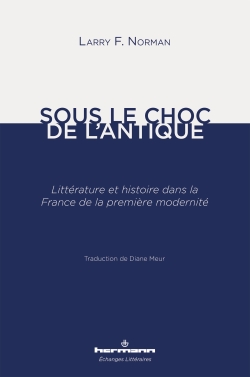 Larry F. Norman, Sous le choc de l'antique, Paris, Éditions Hermann, coll. "Échanges littéraires ", 2022
 Ch. Dieuaide, La vanité et la rhétorique de la prédication au XVIIe siècle, Paris, Editions du Cerf, coll. "Cerf Patrimoines", 2022.
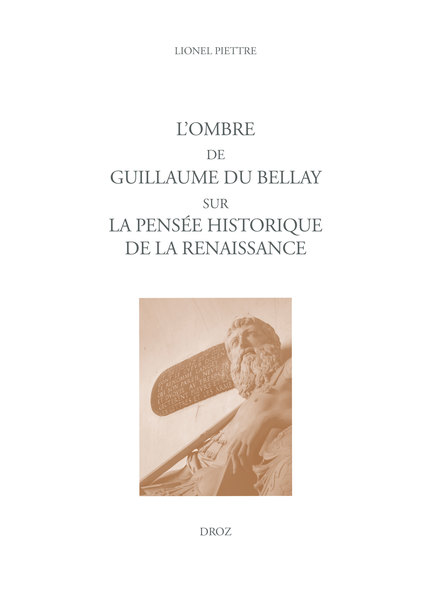 L. Piettre, L'ombre de Guillaume Du Bellay sur la pensée historique de la Renaissance, Genève, Droz, 2022.
 Alain Viala, L’Adhésion littéraire, Le Temps des Cerises, 2022.
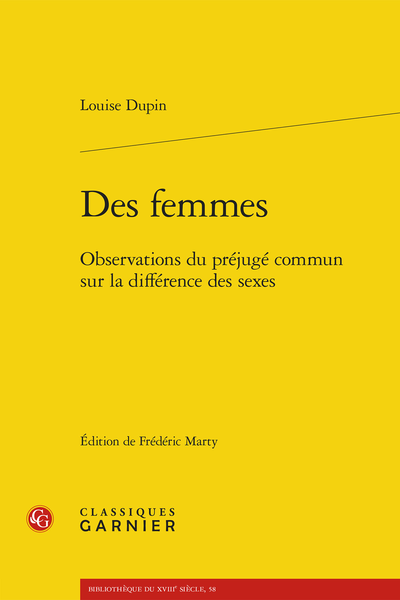 Louise Dupin, Des femmes Observations du préjugé commun sur la différence des sexes, éd. Frédéric Marty, Paris, Classiques Garnier, 2022.