Announce

Calls for Papers and Contributions

CfP: Medieval and Early Modern Spaces and Places 2019: Experiencing the Court
Posted: Monday, October 1, 2018 - 01:27

Deadline 15 November 2018

Trinity Laban Conservatoire,

3-4 April 2019

The early modern court adopted and developed exemplary cultural practices where objects and spaces became central to propagating power as well as places for exchange with other powers. This combination of images, objects, and sounds confronted the senses, making a powerful and distinctive impression of the resident family and the region they represented: flickering candlelight on glass and gold vessels adorned credenze (sideboards); musical instruments announced royal entries or provided entertainment; brightly coloured tapestries covered the palace walls along with paintings of biblical or mythological stories; cabinets displayed antiquities or rarities; perfume burners permeated the air; while the smells and tastes of rare delicacies at the centre of dining tables made for a multi-sensory spectacle.

This year the Open University’s Spaces & Places conference will address the theme of “Experiencing the Court” by exploring the senses and the lived experiences of courtly life, whether based in a particular residence or defined by the travels of an itinerant ruler. This annual conference is fundamentally interdisciplinary: literary, musical, architectural, artistic and religious spaces will be the subjects of enquiry, not as discrete or separate entities, but ones which overlapped, came into contact with one another, and at times were in conflict. Papers that address new methodologies, the digital humanities, object-centred enquiries, cross-cultural comparisons, or new theoretical perspectives are particularly welcome.

Please send a 150 word abstract along with a short biography to Leah Clark (leah.clark@open.ac.uk ) and Helen Coffey (helen.coffey@open.ac.uk

http://www.open.ac.uk/arts/research/medieval-and-early-modern-research/s...

CfP: The 3rd Annual Early Modern Women Writers Colloquium 2019
Posted: Monday, October 1, 2018 - 01:23

April 2019, Nicosia, Cyprus.


This is now a very well-established event,

co-organised by Jim Fitzmaurice, Stella

Achilleos (of the University of Cyprus) and

myself, which brings together a fascinating

array of speakers, from all over the world.

Our meetings take place in the friendly,

welcoming and stimulating environment of

the Centre for Visual Arts and Research,

located in the heart of old Nicosia, the

capital of Cyprus. And, in the city’s

medieval streets, surrounded by the huge

Venetian walls, you will find a very safe

city filled with lovely museums, shops,

cafes and restaurants, as well as ancient

buildings, harking back to the medieval and

renaissance periods, when Cyprus was

ruled by the French Lusignan royal family.


One of the most interesting aspects of the

colloquium being held in Cyprus is the

attendance of non-western speakers,

bringing a unique angle to the discussion of

early modern women writers, and drawing

out a surprising number of non-western

themes in the work of early modern writing.

As in previous years we will be holding our

popular round-table discussion, chaired by

Jim and Stella, where we can take a look at

the developing themes in the study of early

modern women writers, and the teaching of

the subject in the schools, colleges and

universities in which we work and study.

Hopefully, the weather will again be kind

to us in Cyprus, and we will again be able

to hold this outside under the trees at

CVAR - a magical experience!

Deadline for papers is 31 January 2019.

Full details at:

http://othellosisland.wixsite.com/emww

CfP: Canadian Society for Renaissance Studies Panel Panel: “Generic Experimentation in Seventeenth-Century Women’s Writing”
Posted: Monday, October 1, 2018 - 01:19

Canadian Society for Renaissance Studies CONGRESS 2019,

University of British Columbia

VANCOUVER, BC

1-7 JUNE 2019

MEMBER ORGANIZED PANELS


Panel: “Generic Experimentation in

Seventeenth-Century Women’s

Writing”


This panel solicits abstracts for papers

which look at generic experimentation in

seventeenth-century women’s writing, in

the British Isles and/or in France. Papers

which examine the role of a woman writer

(or writers) involved in the emergence and

development of a specific genre (or genres)

are especially welcome. To what extent

could women writers pursuing these

experiments be seen to be more central to

early modern culture and to literary history

than has been previously acknowledged?

Please send abstracts of no more than 300

words to Victoria Burke at

vburke@uottawa.ca by December 15,

2018.


To participate in the conference, you must be a member in good standing of the CSRS-SCÉR for the year 2018. To inquire about membership or find out more about the Society, see our website: https://csrs-scer.com.

CfP: Early Modern Friendship
Posted: Monday, October 1, 2018 - 01:15

Canadian Society for Renaissance Studies CONGRESS 2019,

University of British Columbia

VANCOUVER, BC

1-7 JUNE 2019

MEMBER ORGANIZED PANELS


We invite proposals, in either French or English, on any aspect of early modern friendship, whether in relation to its origins in (and as a revival of) classical amicitia, or to what is now often observed as the increasing tension between friendship and heterosexual romantic love. We would be interested in discussions of theoretical positions on this question (such as those by Erasmus, Montaigne, or Bacon), theatrical representations of friendship (in Marlowe, Shakespeare, Fletcher, or Racine), poetry and correspondence about friendship (see Donne’s verse letters), same-sex friendship (see Katherine Philips’ poems), or any other question arising from our topic. We are aware that there is already a considerable archive of scholarship on this issue, and one of the purposes of our session would be to evaluate the position at which we, as scholars of early modern culture, have arrived. But we would also be delighted to receive explorations of our topic that have not yet been fully articulated.

Please submit your proposal (not exceeding 300 words) to Ronald Huebert (rhuebert@dal.ca) or Ian MacAdam (mcadam@uleth.ca) before December 10, 2018.

To participate in the conference, you must be a member in good standing of the CSRS-SCÉR for the year 2018. To inquire about membership or find out more about the Society, see our website, https://csrs-scer.com.

CfP: Faking it. Forgery and Fabrication in Late Medieval and Early Modern Culture
Posted: Monday, October 1, 2018 - 01:04
The University of Gothenburg, Sweden, 15-17th August 2019. 


What is real and what is fake? And why does it matter? As soon as objects, texts and utterances (be they pragmatic or artistic) become imbued with a sense of authority or authenticity, there is a potential to produce other objects, texts and utterances which mimic and attempt to siphon off that authority and authenticity.

In late medieval and early modern European culture (1400–1750), this potential was realized in new and unprecedented ways. Social, technological, and intellectual developments forever altered many activities which fall under the remit of forgery and fabrication, spurring lively debate about truth and falsity. The printing press transformed the production, distribution and marketing of texts and images. Heightened interest in classical antiquity changed how scholars interacted with and assigned value to artefacts originating in past cultures. Legal developments altered how artworks and documents were policed, and how authorship and authenticity were instantiated.

The conference “Faking it. Forgery and Fabrication in Late Medieval and Early Modern Culture”, held in Gothenburg from the 15th to the 17th of August 2019, seeks to explore the many and varying ways in which legitimate forms of production spawned illegitimate ones in late medieval and early modern culture. The conference is hosted by The Early Modern Seminar at The University of Gothenburg. We welcome proposals on all types of cultural production stemming from all cultural ambits, provided that they are connected with the later medieval and early modern world.

Confirmed keynote speaker: Dr Patricia Pires Boulhosa (Department of Anglo-Saxon, Norse, and Celtic, University of Cambridge)

Topics may include, but are not limited to: • The terminology of spuriosity • Developments in criticism as a response to forgery • The fake as a foil to the authentic • Connections between literary forgery and forgery in the visual arts • The relationship between lying and forgery • Grey areas: where production becomes fabrication • Legal and economic perspectives on fabrication • Fakes and fabrications in arts and sciences • The personality cult of the forger

We invite abstracts of up to 250 words, accompanied by a title and a 50-word biographical statement, to be sent to forgeryconference@lir.gu.se. Note that presentations must last no more than 20 minutes. The deadline for submitting an abstract is the 30th of January, 2019. Enquiries may be sent to the same address or made directly to Matilda Amundsen Bergström (matilda.amundsen.bergstrom@lir.gu.se) or Philip Lavender (philip.lavender@lir.gu.se).

Website: http://lir.gu.se/forskning/forskningssamverkan/tidigmoderna-seminariet

New Publications

Le Temps des « écriveuses » L’œuvre pionnière des épistolières au xviie siècle (Nathalie Freidel)
Posted: 8 Apr 2022 - 07:17

Nathalie Freidel, Le Temps des « écriveuses » L’œuvre pionnière des épistolières au xviie siècle, Paris, Classiques Garnier, 2022.

L’épistolaire permet aux femmes du xviie siècle d’accéder à l’écriture et d’exercer une influence sur la scène culturelle et littéraire. Le temps des écriveuses voit s’épanouir les réseaux épistolaires féminins, dans le cadre de la famille, des relations amicales ou de l’exercice de la sociabilité.

Nombre de pages: 290
Parution: 23/03/2022
Collection: Masculin/féminin dans l’Europe moderne, n° 35
Série: xviie siècle, n° 3
ISBN: 978-2-406-12823-6
ISSN: 2111-6970
DOI: 10.48611/isbn.978-2-406-12825-0

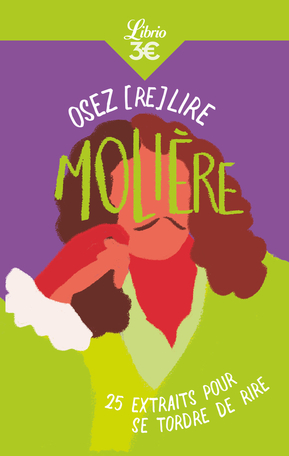
Molière and After. Aspects of the Theatrical Enterprise in 17th- and 18th-Century France (dir. Sabine Chaouche et Jan Clarke)
Posted: 8 Apr 2022 - 07:14

"Molière and After. Aspects of the Theatrical Enterprise in 17th- and 18th-Century France", European Drama and Performance Studies 2022 – 1, n° 18

Numéro dirigé par Sabine Chaouche et Jan Clarke

In 2022, the 400th anniversary of Molière’s birth will be celebrated by means of conferences, exhibitions and publications worldwide. The enthusiasm with which this event is being greeted demonstrates the dramatist’s continued significance for multiple audiences – in theatres, universities, and among the general public. The present volume seeks to contribute to this commemoration of the man who (after Shakespeare) was undoubtedly one of the greatest actor-dramatists and all round ‘men of the theatre’ the world has ever known through an examination of his legacy with regard to the specific field of entrepreneurship. For, while Molière’s outstanding talents as a playwright, actor and stage-director have been praised and analysed by generations of scholars in the fields of literary and performance studies, his work as a company director
and entrepreneur, and the economic context in which he and his troupe operated, has all too often been overlooked.

Plus d'informations ici.

abbé Jean Paulmier, Memoires touchant l’etablissement d’une mission chrestienne (éd. Margaret Sankey)
Posted: 8 Apr 2022 - 07:10

abbé Jean Paulmier, Memoires touchant l’etablissement d’une mission chrestienne dans le troisième monde Autrement appelé, la Terre australe, meridionale, antartique, & inconnuë, éd. Margaret Sankey, Paris, Classiques Garnier, (2006) 2022.

Les Mémoires de l'abbé Paulmier occupent une place importante dans l'histoire européenne du concept de Terra australis. Cette édition critique, la première depuis 1664, est enrichie de documents inédits ainsi que d’une préface replaçant l'ouvrage dans son contexte historique et cartographique.

Nombre de pages: 400
Parution: 23/03/2022
Réimpression de l’édition de: 2006
Collection: Géographies du monde, n° 7
ISBN: 978-2-406-12984-4
ISSN: 1279-8428
DOI: 10.15122/isbn.978-2-37312-289-3

Sainte-Beuve, Causeries sur Montaigne (éd. François Rigolot)
Posted: 8 Apr 2022 - 07:07

Sainte-Beuve, Causeries sur Montaigne, éd. François Rigolot, Paris, Classiques Garnier, (2003) 2022.

Sainte-Beuve parsème ses œuvres de références à Montaigne. Les affinités entre ces « deux cerveaux congénères » sont indéniables et s'étendent de l'homme à l'écrivain. Cette édition donne un aperçu de la réception de Montaigne au xixe siècle et révèle la richesse des analyses du critique littéraire.

Nombre de pages: 239
Parution: 16/03/2022
Réimpression de l’édition de: 2003
Collection: Études montaignistes, n° 41
ISBN: 978-2-406-12952-3
ISSN: 0986-492X
DOI: 10.15122/isbn.978-2-37312-812-3

Anna Maria van Schurman, Letters and Poems (ed. & trans. by Anne R. Larsen and Steve Maiullo)
Posted: 8 Apr 2022 - 06:22

Anna Maria van Schurman, Letters and Poems to and from Her Mentor and Other Members of Her Circle, ed. & trans. by Anne R. Larsen and Steve Maiullo, Iter Press, "The Other Voice in Early Modern Europe: The Toronto Series 81", 2022.

Winner of the 2021 Society for the Study of Early Modern Women and Gender's Award for a Scholarly Edition in Translation

Anna Maria van Schurman was widely regarded as the most erudite woman in seventeenth-century Europe. As “the Star of Utrecht,” she was active in a network of learning that included the most renowned scholars of her time. Known for her extensive learning and her defense of the education of women, she was the first woman to sit in on lectures at a university in the Netherlands and to advocate that women be admitted into universities. She was proficient in fourteen languages, including Latin, Greek, Hebrew, Arabic, Syriac, Aramaic, Persian, Samaritan, and Ethiopian, as well as several vernacular European languages. This volume presents in translation a remarkable collection of her letters and poems—many of which were previously unpublished—that span almost four decades of her life, from 1631 to 1669.

“This volume of letters and poems, which comes at a propitious time in Anna Maria van Schurman scholarship, is far more inclusive than anything I have seen, and will interest a potentially large audience of knowledgeable readers. The letters included here, in superior translations, display the art of letter writing in all its facets and possibilities, trace the continued exchange of ideas with members of van Schurman’s circle, and exemplify the scholarly debates of the seventeenth century, with a woman as one of the debaters.”
- Cornelia Niekus Moore, University of Hawaii

ANNE R. LARSEN is professor emerita of French and senior research professor at Hope College in Holland, Michigan. She is the author of Anna Maria van Schurman, “The Star of Utrecht”: The Educational Vision and Reception of a Savante.

STEVE MAIULLO is Associate Professor of Classics at Hope College. He teaches Latin and Greek language and literature and is the author of articles on Plato and the teaching of Latin and Greek.

More info here.