


Announce

Calls for Papers and Contributions

CfP: The Orléans Collection: Tastemaking, Networks and Legacy
Posted: Sunday, September 9, 2018 - 00:25

The Orléans Collection: Tastemaking, Networks and Legacy

New Orleans Museum of Art, January 11-13, 2019

Proposals: September 30, 2018

The New Orleans Museum of Art and the Frick Center for the History of Collecting will host a 

symposium in conjunction with 'The Orléans Collection' exhibition dedicated to the collecting 

and collection of Philippe II duc d'Orléans (1674–1723) on view at the New Orleans Museum of 

Art October 26, 2018 through January 27, 2019 


Collecting over just over two decades, Philippe II d'Orléans amassed one of the most important 

collections of European paintings in the history of art, which he displayed in his Palais-Royal in 

Paris. This celebrated collection assembled over 500 masterpieces of European Art and this

landmark exhibition reunites a representative group of forty works to tell the complex story of

the collection's formation and character and the impact of the sales of the collection in London

during the French revolution, a watershed event in the history of collecting. 


The Orléans Collectionexhibition catalogue essays offer an overview of the collection, Philippe's 

relationship with his court painter Antoine Coypel, the refurbishment of the Palais-Royal during 

the regency, his collecting of Venetian, Dutch and Flemish and Bolognese Art, contemporary 

artists studying the collection, and a review of the circumstances of the collection's dispersal.

The catalogue's extensive Appendix transcribes the earliest 1727 publication of the collection 

tracing picture to their current locations. 


The symposium seeks to expand beyond the scope of the catalogue and consider a 

wider range of relationships concerning Philippe d'Orléans's taste and the impact the collection 

had for generations of collectors and artists, and an increasingly wider public throughout the 

eighteenth century. Subjects of interest might include: Philippe II's patronage network; fellow

collectors and trends in collecting in Paris; dealers and the art market in eighteenth century

Paris; connections with contemporary collections in the German principalities; the 'Orléans 

Effect' in Great Britain and later entrance in public collections.  


Travel can be provided to a limited number of applicants. 

To propose a paper, please submit a message of interest and 300 word abstract by September 30, 2018to: nomasymposium@noma.org

CfP: NEGOTIATIONS AND NEGOTIATING IN HISTORICAL PERSPECTIVE: A CONVERSATION IN EARLY MODERN STUDIES
Posted: Sunday, September 9, 2018 - 00:23

KINGS COLLEGE LONDON

3 June 2019

Proposals: 1 March 2019

The ability to publicly negotiate, to have conversation and to utilise political language appears to be in crisis. The politics of now is a politics dened by our inability to speak to one another|Donald Trump, Brexit and Migration have exposed the ssures in our communities and the inability for civil and political leaders to nd common ground. Yet, it has never been so easy to talk to one another: the use of Twitter by movements such as Black Lives Matter and #metoo shows the benets and limitations of a new public sphere. This is not the first time that civil discourse has expanded or broken down. The early modern period saw a dramatic increase in people talking, debating and arguing with each other; religion, colonialism, nationalism and political ideology separated people from each other as much as they brought them together. This was a period dened by debate, conversation, misunderstanding and caricature.


This conference aims to bring together scholars from across the humanities to facilitate greater interdisciplinary work, to discuss how the study of the early modern era is entwined with our understanding of the current world, and how such work may impact the present. We aim to inspire thought on structures of empowerment and disempowerment in settings of law, politics and institutions, and also within trade and writing. We want to address the question of what it means to negotiate, to converse, and to foster productive political debate. We invite papers that focus specically on negotiations within the period, and also papers that address the themes of negotiation and conversation more theoretically or broadly. Perspectives on gender, class, race and religion are particularly encouraged|especially those that utilise academic training to engage with these questions more expansively.


Topics may include, but should not be limited to:

The Negotiation of Space

Religious Negotiations

Race, Religion, Gender, Class and other

Identity Categories

Ways to utilise humanities research

Negotiation of and within Print Culture

Negotiations in Theatre, Fiction and the Arts

Habits and Methods of Coping with the

Early Modern Experience

The Physicality of Negotiations

Diplomatic and Political Negotiations

The Negotiation of the Early Modern World as lived Experience

Systems of Empowerment and Disempowerment

Negotiations across and within institutions


The conference will take place on 3 June 2019, in the Strand Building, King's College London.

In addition to the panels, a keynote address will be given by Professor Andy Wood. Please

send abstracts of no longer than 300 words to dominic.birch@kcl.ac.uk by 1 March 2019.

Registration will be free, and we will be able to cover some travel costs for postgraduates and early career researchers.

CfP: ACLA seminar on performativity
Posted: Saturday, September 8, 2018 - 00:14
Dear colleagues,
I am organizing the following session at next year's ACLA in Washington D.C. (March 7-10, 2019) with a colleague working on Haitian literature. Our goal is to put early modern and modern scholars working on polemic / performativity into dialogue, and with that, I would like to invite any interested colleagues to kindly submit a proposal via the ACLA portal between this coming Thursday, August 30 and September 20, 2018. Details on the call can be found through the following link:


For those who haven't yet attended an ACLA conference, the seminar format works really well for engaging ideas more deeply over several days, and for creating an environment in which to develop and "test out" new projects.
 
Please feel free to reach out with any questions: kal397@nyu.edu.
 
With all good wishes for the coming academic year,
Katie
 
Kathrina LaPorta


CfP: Transnational Opera Studies Conference
Posted: Friday, September 7, 2018 - 23:59
An updated version of the CFP of tosc@paris.2019 (3rd edition of the Transnational Opera Studies Conference, 27-29 June 2019) is now available.
 
The third Transnational Opera Studies Conference will be organized by the Université Paris 8, hosted by the Opéra de Paris and the Institut national d'histoire de l'art, partners of tosc@paris.2019, with the Bibliothèque nationale de France, the Musée du Louvre, the Opéra-Comique and the Centre Pompidou-Metz.
 
Proposals are now welcome not only for individual papers, but also for themed sessions and roundtables, on any subject related to opera and other forms of musical and music theatre.
 
Full details and more information available at: http://www.scenes-monde.univ-paris8.fr/spip.php?article1432
 
Proposals must be submitted as attachments by email (“.doc” or “.docx” format – not “.pdf”) to paristosc - at - gmail.com by 30 September 2018.
Appel à communications : Women Editors in Europe, 1710-1920
Posted: Monday, September 3, 2018 - 18:11

Ghent (Belgique, 28-29 mai 2019), avant le 15 novembre 2018

An International Conference from 28-29 May 2019, at Ghent University, Ghent, Belgium

Research on women’s contributions to the periodical press often focuses on women’s periodicals, considering them as separate “feminized” spaces devoted to the interests of particular circles of female readers. This conference takes a different approach. Focusing on women editors rather than women’s periodicals, it explores how periodical editorship enabled women to create public voices, participate in public debate and act as agents of change far beyond their immediate sphere of influence. As part of the European Research Council funded project “Agents of Change: Women Editors and Socio-Cultural Transformation in Europe, 1710-1920,” we invite papers on a wide variety of topics related to female periodical editorship in Europe in the broadest historical sense of the word (not just the current European Union) from the early eighteenth to the early twentieth century.

Topics may include

  • Women editors as makers of culture or arbiters of taste
  • Women editors as advocates of social change
  • Women editors as proponents of women’s rights
  • Women editors as mediators (e.g. transnational or cross-cultural)
  • Women’s editorial identities & strategies
  • Female editorship and/as authorship
  • Male editors adopting female editorial personae
  • Women taking on multiple roles as editors, authors, publishers, translators, salon hostesses, activists etc.
  • Women editing behind the scenes as subeditors, assistants, editors’ wives etc. or influencing (male) editors in their own creative ways
  • Women editors’ networks
  • Digital periodical studies focusing on women editors and their periodicals
  • Gendered approaches to theories of editorship

We invite case studies of individual editors as well as comparative, theoretical or methodological approaches. We are particularly interested in papers examining women’s editorship across chronological or language boundaries.

The working language of the conference is English. We welcome proposals from researchers at all stages of their careers.

Proposals of around 250 words (references not included) for 20-minute papers and a short CV (no more than 200 words) should be sent to wechanged@ugent.be by 15 November 2018. We also welcome proposals for joint panels of three papers. Please include a brief rationale for the panel along with an abstract and CV for each presenter.

Source: SIEFAR
New Publications

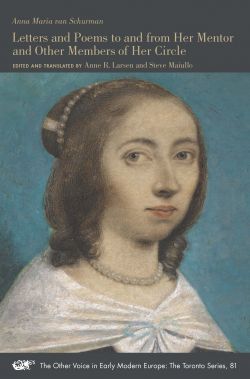
Anna Maria van Schurman, Letters and Poems (ed. & trans. by Anne R. Larsen and Steve Maiullo)
Posted: 8 Apr 2022 - 06:22

Anna Maria van Schurman, Letters and Poems to and from Her Mentor and Other Members of Her Circle, ed. & trans. by Anne R. Larsen and Steve Maiullo, Iter Press, "The Other Voice in Early Modern Europe: The Toronto Series 81", 2022.
Winner of the 2021 Society for the Study of Early Modern Women and Gender's Award for a Scholarly Edition in Translation

Anna Maria van Schurman was widely regarded as the most erudite woman in seventeenth-century Europe. As “the Star of Utrecht,” she was active in a network of learning that included the most renowned scholars of her time. Known for her extensive learning and her defense of the education of women, she was the first woman to sit in on lectures at a university in the Netherlands and to advocate that women be admitted into universities. She was proficient in fourteen languages, including Latin, Greek, Hebrew, Arabic, Syriac, Aramaic, Persian, Samaritan, and Ethiopian, as well as several vernacular European languages. This volume presents in translation a remarkable collection of her letters and poems—many of which were previously unpublished—that span almost four decades of her life, from 1631 to 1669.

“This volume of letters and poems, which comes at a propitious time in Anna Maria van Schurman scholarship, is far more inclusive than anything I have seen, and will interest a potentially large audience of knowledgeable readers. The letters included here, in superior translations, display the art of letter writing in all its facets and possibilities, trace the continued exchange of ideas with members of van Schurman’s circle, and exemplify the scholarly debates of the seventeenth century, with a woman as one of the debaters.”
- Cornelia Niekus Moore, University of Hawaii

ANNE R. LARSEN is professor emerita of French and senior research professor at Hope College in Holland, Michigan. She is the author of Anna Maria van Schurman, “The Star of Utrecht”: The Educational Vision and Reception of a Savante.

STEVE MAIULLO is Associate Professor of Classics at Hope College. He teaches Latin and Greek language and literature and is the author of articles on Plato and the teaching of Latin and Greek.

More info here.

Chanteloup, the Renaissance garden of the Villeroys (éd. Perrine GALAND-WILLEMEN, Matthieu DEJEAN)
Posted: 8 Apr 2022 - 06:18

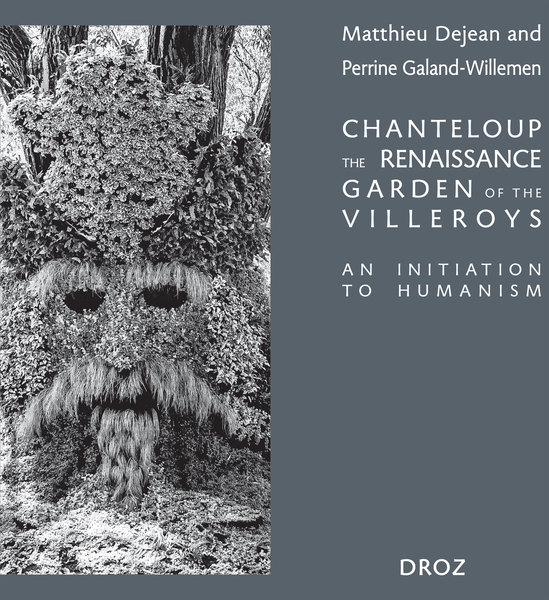
Chanteloup, the Renaissance garden of the Villeroys. An initiation to Humanism, édité par Perrine GALAND-WILLEMEN, Matthieu DEJEAN, Genève, Droz, 2022.
The garden of the Chanteloup castle (Saint-Germain-lès-Arpajon), owned by the Villeroy-Neufville family, was one of the wonders of the French Renaissance, which could compete with the great Italian gardens of the time. Perrine Galand-Willemen and Matthieu Dejean revive this exceptional artistic creation in its historical and intellectual context. The authors have studied several travel guides and a long Latin poem entitled Cantilupum (Paris, 1587; 1588), which describes the meanders of the garden. Cantilupum was written by Madeleine de L'Aubespine-Villeroy (1546-1596), wife of Secretary of State Nicolas IV de Neufville-Villeroy, lady of honour of Catherine de' Medici, woman of letters whom Ronsard considered his “spiritual daughter”. The garden of Chanteloup housed an extraordinary set of topiaries (carved shrubs), automata, statues, models and fountains, which recreated Roman civilization and offered an initiatory, stoic-Christian course to the walker.

Le jardin du château de Chanteloup (Saint-Germain-lès-Arpajon), propriété des Villeroy-Neufville, fut une des merveilles de la Renaissance française, qui pouvait rivaliser avec les grands jardins italiens du temps. Perrine Galand-Willemen et Matthieu Dejean font revivre cette exceptionnelle création artistique dans son contexte historique et intellectuel. Les auteurs ont travaillé à partir de plusieurs guides de voyages et d’un long poème latin intitulé Cantilupum (Paris, 1587 ; 1588), qui décrit les méandres du jardin. Cantilupum fut écrit par Madeleine de L’Aubespine-Villeroy (1546-1596), épouse du secrétaire d’Etat Nicolas IV de Neufville-Villeroy, dame d’honneur de Catherine de Médicis, femme de lettres que Ronsard considérait comme sa « fille spirituelle ». Le jardin de Chanteloup abritait un ensemble extraordinaire de topiaires (arbustes sculptés), d’automates, de statues, de maquettes et de fontaines, qui reconstituait la civilisation antique et offrait un parcours initiatique, sto¯co-chrétien, au promeneur.

Plus d'informations ici.

L'Astrée - 3e partie (éd. crit. dir. par Delphine Denis)
Posted: 8 Apr 2022 - 06:12

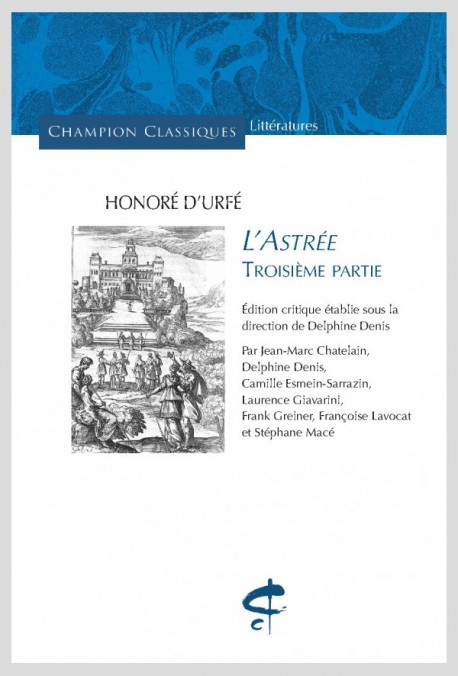
L'Astrée - 3e partie, éd. crit. dir. par Delphine Denis, Paris, H. Champion, 2022.
Un siècle après l’Arcadia de Sannazar (1504), L’Astrée marque l’achèvement de la conquête de l’antique fable pastorale par les littératures européennes en langues vulgaires : paru entre 1607 et 1628, le roman d’Honoré d’Urfé est le dernier des grands chefs-d’œuvre nourris de la veine des histoires de bergers. Mais la narration des amours d’Astrée et Céladon dans la Gaule du Ve siècle inaugure aussi une nouvelle époque de la littérature française. Premier des grands récits publiés au moment où la France répare les plaies nées des guerres de Religion, l’œuvre est très vite apparue comme une étape décisive dans l’art du roman, en même temps que, par sa philosophie de « l’honnête amitié », elle s’est imposée à ses lecteurs comme une référence commune, offrant ainsi la mémoire littéraire des manières de sentir et d’aimer de l’âge classique.

Le présent volume livre le texte de la troisième des cinq parties de L’Astrée, précédé d’une introduction qui en dégage la couleur propre : tandis que Céladon, sous un travestissement féminin, goûte un bonheur fragile auprès d’Astrée, dans les cours princières l’Amour apparaît plus que jamais menacé par le Pouvoir, et le monde arcadien des bergers est précipité dans le temps de l’Histoire.

L'édition est parue en deux formats: informations ici et ici.

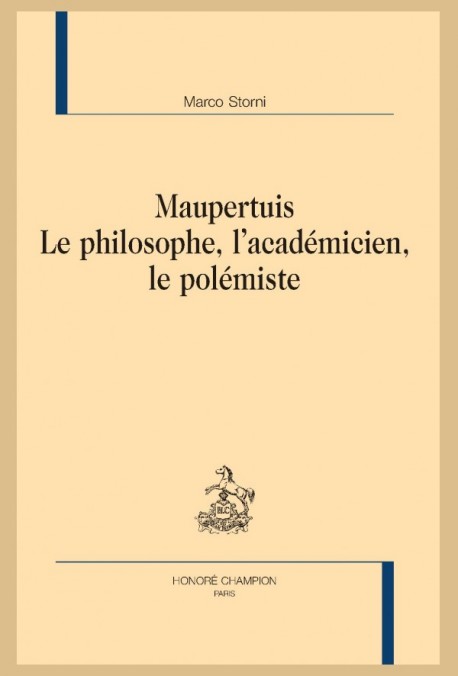
Maupertius. Le Philosophe, l'Académicien, le Polémiste (Marco Storni)
Posted: 8 Apr 2022 - 06:08

Marco Storni, Maupertius. Le Philosophe, l'Académicien, le Polémiste, Paris, H. Champion, 2022.
Aujourd’hui presque oublié, Pierre-Louis Moreau de Maupertuis (1698-1759) est pourtant une figure majeure de la vie intellectuelle et institutionnelle du siècle des Lumières. Cet ouvrage se propose de renouveler l’image du savant en approfondissant certains aspects saillants de sa vie et de son œuvre, et de lui restituer ainsi la place qu’il mérite dans l’histoire de son siècle. Il s’agit notamment d’interroger la genèse et l’évolution de sa pensée philosophique, en dévoilant l’originalité de son épistémologie et de sa métaphysique. L’identité du « Maupertuis philosophe » se construit en parallèle avec celle de l’« académicien » et du « polémiste ». C’est pourquoi ce volume consacre aussi un large espace à l’étude des milieux académiques où Maupertuis travailla, à Paris comme à Berlin, ainsi qu’aux controverses auxquelles il prit part.

Marco Storni est docteur de l’École normale supérieure de Paris et de l’Université de Bologne. Il a été collaborateur scientifique à l’Université de Neuchâtel, boursier Herzog-Ernst au Forschungszentrum Gotha de l’Université d’Erfurt et chercheur postdoctoral à l’Université Ca’Foscari de Venise. Depuis 2020, il est chercheur postdoctoral à l’Université de Neuchâtel.

Plus d'informations ici.

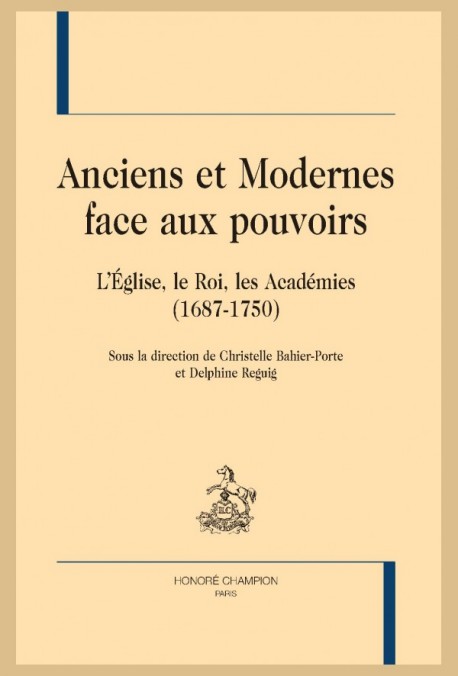
Anciens et Modernes face au pouvoir (dir. Christelle Bahier-Port et Delphine Reguig)
Posted: 8 Apr 2022 - 06:05

Anciens et Modernes face au pouvoir. L'Église, le Roi, les Académies (1687-1750), dir. Christelle Bahier-Port et Delphine Reguig, Paris, H. Champion, 2022.

Pour quoi et contre qui Anciens et Modernes se sont-ils vraiment affrontés ? Alors que la monarchie encadre la vie culturelle par la création d’institutions nouvelles comme les académies et le Bureau de la Librairie, ceux que l’on qualifie d’Anciens ou de Modernes cherchent moins à construire une unité de parti qu’à cultiver de mobiles nuances au sein d’un champ littéraire en pleine transformation où chacun entend se faire une place. La possibilité d’une littérature moderne, solidaire de la pensée d’un pouvoir autonome de la littérature, s’élabore au cœur d’une dialectique avec les pouvoirs politiques et religieux dont la subtilité et les évolutions peuvent éclairer la compréhension des enjeux de la Querelle dans son ensemble. Les articles réunis dans ce volume s’attachent à contribuer au renouvellement de l’approche critique d’un moment majeur de l’histoire intellectuelle. Ils proposent des lectures qui, sans majorer ni surdéterminer le clivage entre les deux partis, ni prendre à la lettre les scénographies polémiques face aux pouvoirs d’Ancien régime, montrent comment la Querelle permet au monde des arts et des lettres d’accéder à une certaine autonomie, en composant avec les éventuels antagonismes partisans mais sans s’y subordonner. Face aux pouvoirs, les acteurs de la Querelle ne tiennent pas un propos univoque ni un discours toujours assumé ou stable. Ce sont alors les contradictions de ces positions, leurs coïncidences inattendues ou leurs transgressions tacites qui permettent d’éclairer, plus subtilement que la partition des camps, la nature profonde de la Querelle.

Christelle Bahier-Porte est professeure à l’Université Jean Monnet – Saint-Étienne et membre de l’Institut d’histoire des représentations et des idées dans les modernités (IHRIM UMR 5317). Ses travaux sur la Querelle des Anciens et des Modernes portent sur les œuvres de Houdar de La Motte et de Marivaux, sur les enjeux de la réécriture, les questions poétiques et esthétiques en particulier au début du XVIIIe siècle, Elle a co-dirigé avec Claudine Poulouin, Écrire et penser en Moderne (1687-1750) (Honoré Champion, 2015).

Membre senior de l’I.U.F., Delphine Reguig est professeure à l’Université Jean Monnet – Saint-Étienne et membre de l’Institut d’histoire des représentations et des idées dans les modernités (IHRIM UMR 5317). Elle a publié Boileau poète. « De la voix et des yeux… » (Classiques Garnier, 2016) et est actuellement responsable de l’édition numérique collective des quatre tomes du Parallèle des Anciens et des Modernes de Charles Perrault (https://paralleleanciens- modernes.huma-num.fr/).

Plus d'informations ici.